
Sugar Dating in the Media: Fact vs. Fiction in Popular Movies and TV Shows
Because so many people have never met a sugar baby or sugar daddy in person (at least that they know of), it’s easy to see why sugar dating myths in movies tend to stick. From Hollywood films to false TikTok accounts to overly dramatic television series, there’s so much that pop culture gets wrong about sugar dating.
In this article, we’re going to cover some of the most well-known portrayals of sugar dating in movies and TV series to consider what they got right and where they veered way off course!
Spoiler Alert Before We Jump In
Be warned that we’re going to be talking about some big reveals and unexpected moments in film and TV history for this article! So, if you see a title on this list that you haven’t seen yet, consider watching it for yourself before reading so we don’t spoil the ending for you!
Breakfast at Tiffany’s (1961)
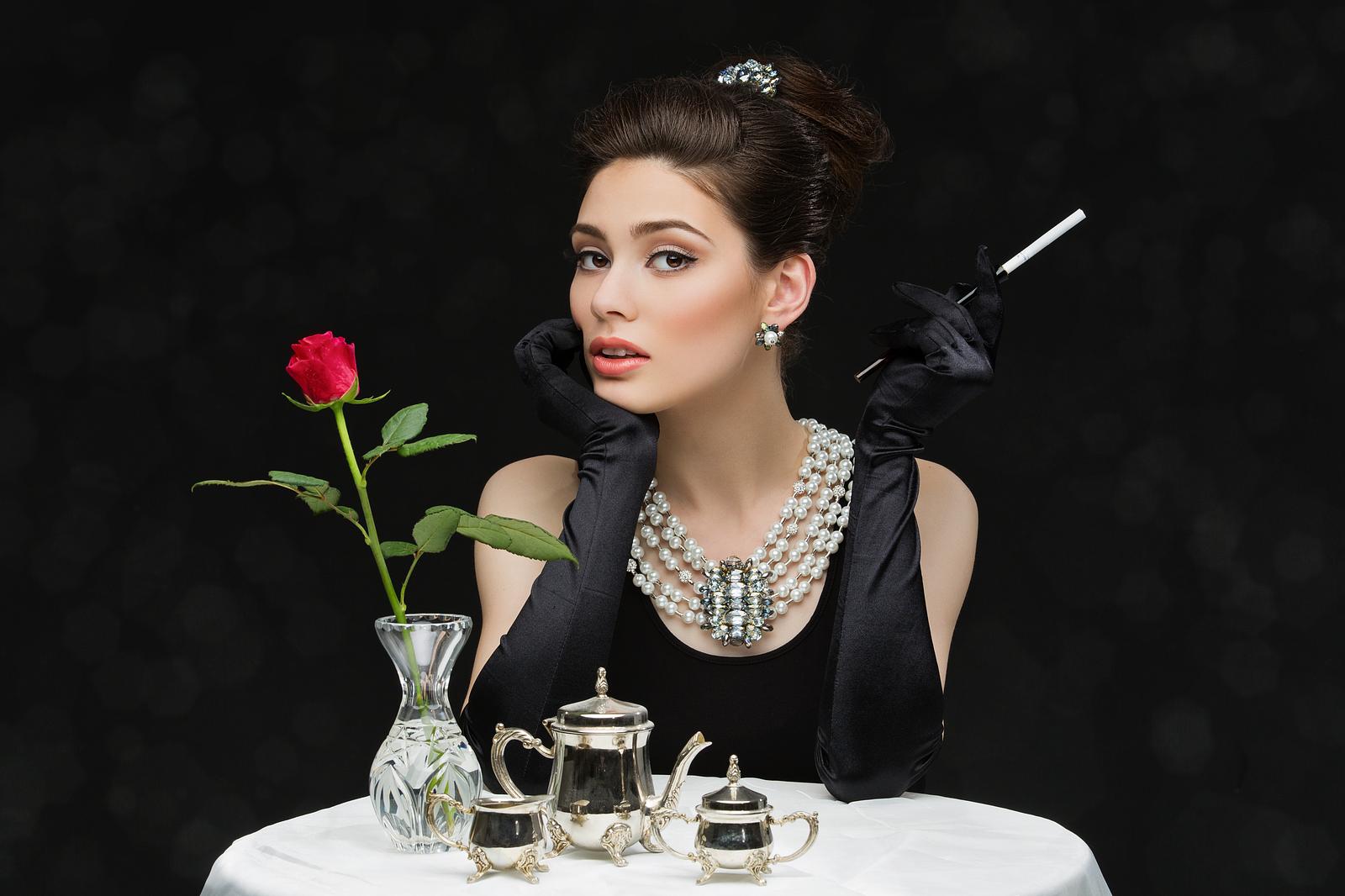
Perhaps one of the most famous depictions of sugar dating is the classic Breakfast at Tiffany’s released in 1961, starring Audrey Hepburn. In this iconic movie, Hepburn plays a fashion-forward “socialite” with various boyfriends and love interests who seem to offer more monetary and practical support than romantic intrigue.
The sugar-centric plot thickens when it’s revealed that Holly’s new neighbor, Paul, is something of a sugar baby himself, being sponsored by a wealthy older woman as he “works on his book.” Once he falls in love with Holly, Paul decides to end his arrangement, and is disappointed when Holly doesn’t automatically do the same.
In the end, Holly continues to resist giving up her lifestyle in favor of romantic love. But the final kiss between her and Paul suggests that she may, in fact, be ready to give up being a sugar baby.
Did they get it right?
Given the time period, it’s impressive that Breakfast at Tiffany’s was allowed to tackle a subject as taboo as sugaring, and it’s even more striking that both a man and a woman were depicted as sugar babies.
Another positive about Breakfast at Tiffany’s is the fact that Holly is depicted as sometimes naive, but also independent, resourceful, romantic, fiery, and fearless. In all, she’s a fully-formed character with autonomy, which is often not the case with depictions of sugar babies in Hollywood.
Pretty Woman (1990)
Pretty Woman is another iconic movie that catapulted leading actor Julia Roberts into stardom for her role as Los Angeles-based escort, Vivian.
We should mention that to begin with, Vivian is operating more in the role of sex worker than sugar baby. But, as the relationship between her and Edward (Richard Gere) develops, it’s clear that the two are interested in something more than just a transaction for physical intimacy. They open up to each other, share deep conversations, and go on romantic dates. Eventually, Vivian confesses her love for Edward.
Problems brew when Edward rejects her romantic advances, offering something akin to a sugar relationship instead: he’ll pay for an apartment for her in New York and anything she needs. Vivian refuses, as she wants a traditional relationship with him.
Eventually, she cuts off the connection entirely and decides to move to San Francisco to finish school. But, as she’s getting ready to leave, Edward shows up just in time, climbs the fire escape, and wins her over.
Did they get it right?
Pretty Woman has been criticized and praised for its handling of non-traditional relationships. On the one hand, Vivian is a 3-dimensional character who feels very real and relatable, which is a great way to humanize women who choose non-traditional lifestyles. On the other hand, Vivian’s initial rejection of a sugar relationship and then later acceptance of a romantic relationship with Edward (which we can only assume will have all the characteristics of a sugar relationship) suggests that audiences will still always prefer a fairytale romantic ending.
White Lotus (Season 3, 2025)
Of the many plotlines in the HBO series, White Lotus, the sugar daddy/baby dynamic between older villain Greg and his young model girlfriend Chloe was honestly one of the least troublesome. Sure, Greg possibly earned his fortune through nefarious means in Seasons 1 and 2, but now, he’s no more than a vaguely threatening character who just wants to live in luxury and anonymity.
Chloe, herself, is one of the most balanced characters in the show, if a little bit naughty when it’s time to party. Overall, she’s friendly and poised, intelligent and calculated. She seems to understand that she’s in a potentially dangerous situation, but also seems willing to accept the risk in order to live the life she wants.
Did they get it right?
Interestingly, our sugar baby, Chloe, gets a relatively happy ending in White Lotus (other than, you know, losing her friend Chelsea) while disproving a few sugar dating myths in the process. And even though she was aware of Greg’s potential for violence and mood swings, she knew that she was better off than her close friend Chelsea, who was making decisions with her heart instead of her head. Indeed, her warnings for Chelsea to get away from her co-dependent, romantic relationship with Rick were prescient and wise.
We’ll admit that we’d like to see a sugar daddy with a better character for our girl, Chloe. But, at the very least, she got out alive and will presumably continue living a pretty luxurious lifestyle in paradise.
Sugar Babies (2015)
If you’re a fan of Lifetime movies, this one featuring Alyson Stoner might have come across your radar. It tells the story of a college-aged art history major, Katie, who stumbles upon the world of sugaring accidentally by accepting a double date with a friend. She comes to find out that her friend, along with several other girls at university are sugar babies, and she’s suddenly faced with the core question of the movie. Does she continue seeing her older, attractive sugar daddy who can help her pursue her goals and stop struggling financially? Or does she find a way to get through school without help?
In the end, Katie and the rest of the sugar babies decide to break things off with their sugar daddies and become self-supportive, even if that means sacrificing certain opportunities. Overall, all of the girls go on to become successful.
Did they get it right?
In terms of breaking sugar dating myths, no, we wouldn’t say that Sugar Babies departs from common stereotypes: young girls being somehow “swept up” in the world of sugaring, sugar daddies as ultimately untrustworthy people, and the ethical high ground of deciding to opt out of a sugar relationship. Anyone who’s actually had experiences in the Bowl would probably roll their eyes.
One good thing we can say about Sugar Babies is that it’s fairly void of drama in a way that real sugar relationships tend to be far less dramatic than people think. The girls negotiate their terms, nothing terribly bad happens (other than a freak medical incident), and they’re able to end their arrangements without a fuss.
Shameless (Season 2, episode 2, 2012)
In the “Summer Loving” episode of Shameless, season 2, main protagonist Fiona (played by Emma Rossum) is offered an opportunity to date a sugar daddy named Richard. Wealthy and charming, Fiona is initially attracted to him as a partner but asks him for assurance that he’s not married (spoiler: he lied.) Quickly, it becomes clear that the relationship isn’t going to stick. Fiona isn’t interested in becoming a sugar baby and feels odd around Richard’s wealth and status.
Did they get it right?
Yes, and no. Overall, Shameless did a pretty good job as a TV series to take on real-world issues in a way that didn’t feel moralistic or sugar-coated. So, it’s no surprise that they didn’t fall back on too many sugar dating myths here. Rather, Fiona was given an opportunity to enjoy some financial support through sugaring and even seemed open to the idea as long as her sugar daddy wasn’t married. It soon became clear, though, that sugaring wasn’t for her and that her sugar daddy wasn’t an honest person. So, although her experience wasn’t positive, it wasn’t an entirely unbelievable depiction of sugaring, either.
Sugar Daddies (2014)
Perhaps the darkest take on the “group of college girls become sugar babies” trope on our list, Sugar Daddies is a thriller/murder mystery starring Taylor Gildersleeve as pre-law student Kara Jones. In line with one of the sugar dating myths often portrayed in these kinds of movies, Kara is at her breaking point. With no job, no savings, and her father’s crippling medical debt, she faces passing up an important unpaid internship that could help her career. But luckily, her fellow college classmate has an option: sugaring. Hesitant at first, Kara decides to take her chances with charming, wealthy sugar daddy, Grant.
But when an already shaky threesome goes awry, resulting in the accidental death of another sugar baby, Kara’s situation becomes exponentially worse. Grant tries to have Kara “taken care of” by his bodyguard. But luckily, Kara’s dad comes in to save her.
Did they get it right?
Sugar Daddies is part thriller, part psychological drama, part cautionary tale. So, there’s a lot of fantasy at play here. Without a doubt, many college students do face financial difficulties. But, Grant’s overly villainous attitude and disregard for the safety of his sugar babies is far from realistic. The “Hitman's Bodyguard” is also pure movie fiction.
The New Romantic (2018)
In this 2018 film, we follow the experiences of Blake (played by Jessica Barden) as she explores a world of age gap dating as a way to spruce up her romance column in her university paper. Her potential sugar daddy is a successful older professor named Ian, who offers Blake a sugar relationship on their very first meeting. And, in an attempt to gain a competitive edge for a journalism award, Blake agrees so that she can write about him.
Over the course of the film, Blake grapples with ethics, journalism practices, and her own feelings. And in the end, she publishes her experiences under her own name, despite Ian’s threats about ruining her career should she expose him. In the end, Blake ends up with fellow journalism student, Jacob.
Did they get it right?
One of the biggest sugar dating myths that we see play out in this film is the “I fell into sugaring and then found my one true love.” Throughout the film, Blake was never seriously interested in sugaring, but rather advancing her own career and gaining an advantage over her fellow students. In the end, she seems to have won, without having to feel guilty about having used Ian for her own gain because, he wasn’t such a good guy anyway. Is it a story that could be true? Sure. Is it the way that most sugar relationships go? Not so much.
Shiva Baby (2020)
Again we have a college student-turned sugar baby plot, but this time with a little more depth and nuance. Danielle, played by Rachel Sennott, is our main character, a bi Jewish woman who runs into both her ex-girlfriend and current sugar daddy at a shiva. Dark hilarity ensues, which reveals how interconnected and chaotic Danielle’s life has become, as well as how difficult it is to keep secrets in such a tightly-knit community.
In the end, Danielle and her sugar daddy discuss ending their arrangement, and the protagonist reconnects with her previous love, Maya.
Did they get it right?
Shiva Baby is one of those films that does a great job of putting sugaring in a real-life setting. We see Danielle struggle to meet her family’s expectations, grapple with her own identity, and navigate a post-romantic connection with her former girlfriend. And, when her sugar daddy is thrown into the mix, things become darkly funny in a very human way.
Because Shiva Baby is written so cleverly, we can overlook the typical sugar dating myths in favor of the film’s ability to convey how sugaring can look in the real world.
Sugar Baby (2025)
This BET+ original movie is one of the most recent and highest rated films on our list, and follows the journey of protagonist Jade, played by Christina Cooper. When Jade’s boyfriend is served a prison sentence, she turns to sugaring as a way to get herself back on her feet financially. When entering this world, Jade meets wealthy, handsome billionaire, Anthony, who is looking for a sugar baby as he navigates life after his wife’s passing.
Did they get it right?
One of the things we love about Sugar Baby is that it shows a variety of different kinds of people and relationships within the world of sugaring. Getting to see an array of different dynamics, personalities and circumstances is a good way to debunk typical sugar dating myths.
We also appreciate the fact that Jade seemed to genuinely enjoy her time with her sugar daddy, so much so that she found it difficult to choose between him and her boyfriend when he got out of prison. Unlike many of the movies that depict sugar daddies as untrustworthy and ultimately bad, this film showed that there are genuinely good people who decide to go into sugaring.
Most common sugar dating myths in movies and TV
So what are the takeaways from our review of sugar dating in popular movies and TV series throughout the decades? When it comes to sugar dating myths that we’d like to debunk, some of the most common include:
- Sugar babies as exclusively college-aged girls. Sugar babies can be any age and gender, so this is a pretty tired trope.
- Sugar babies falling into sugar dating unknowingly, hesitatingly, or as a last resort. While many sugar babies are introduced to the idea through friends, plenty take their own initiative to make a profile of sugar dating sites as a way to build financial independence. Conveying them as helpless, needy, and passive doesn’t do the real-world sugar baby justice.
- All sugar daddies are bad, untrustworthy dudes. Almost all of the sugar daddies we see in popular media are portrayed as selfish, manipulative and even dangerous older men who will do anything to get what they want. This is simply not true, and many are emotionally mature, caring people who just want to enjoy their wealth with the right companion.
- Sugaring is immoral. This is one of the most insidious sugar dating myths that come across in movies and TV shows, and it’s one that most screenplay writers just can’t seem to get away from. Personally, we’d like to see more representation of healthy sugar relationships onscreen, but for now, we’ll just have to be content with enjoying them in real life.
Did we miss your favorite sugar dating movie or show?
We couldn’t fit all of the many films, series, and even podcasts and Youtube channels depicting the world of sugar dating. So, keep an eye out and you’ll start seeing onscreen sugar babies and daddies all over the place! Just make sure that you’re able to separate the sugar dating myths from the real-life experience!
