
Signs an Age Gap Is Becoming Unhealthy in a Partnership
Most people have an opinion about age gaps in relationships, and they tend to share it freely. Your cousin brings someone 15 years older to Thanksgiving dinner, and suddenly, everyone at the table becomes a therapist. A coworker mentions her boyfriend is 12 years younger, and the group chat lights up. We all carry assumptions about what kind of age difference is too much, but very few of us have actually sat down and thought about where that line falls and why.
The truth is that a number alone rarely tells the full story. A 10-year gap between a 40-year-old and a 50-year-old feels completely different from the same gap between a 20-year-old and a 30-year-old. Context matters, and so does what is actually happening inside the relationship. So instead of picking an arbitrary cutoff, it makes more sense to look at the patterns, behaviors, and dynamics that push an age gap from perfectly fine into genuinely unhealthy territory.
How Common Are Age-Gap Relationships?
Age differences between partners are more common than a lot of people assume. A 2022 Ipsos poll found that nearly 40% of Americans have been in a relationship with a noticeable age gap at some point. U.S. Census data shows that about 8.5% of married opposite-sex couples have 10 or more years between them, and among those couples, only 1.3% involve an older woman.
Globally, a 2022 study that analyzed data from 130 countries found that men are on average 4.2 years older than their female partners. That number shifts depending on the region. In North America, the average difference was 2.2 years, and in Europe it was 2.7 years.
So while a gap of a few years is extremely typical, larger gaps are still quite present in the data.
When Does an Age Gap Become Unhealthy?

There is no single number that flips a healthy relationship into an unhealthy one. According to Choosing Therapy, an unhealthy age gap is best defined by what is happening between the two people rather than the years separating them. Their framework points to power imbalances, control issues, exploitation, manipulation, a lack of consent, psychological or emotional abuse, and isolation as the real markers.
Therapist Pataky has noted that the impact of an age gap "depends far more on the life stages each person is in than on the numerical difference alone." Two people who are 8 years apart but both settled into careers, friendships, and a general sense of who they are might get along wonderfully. Meanwhile, a 5-year gap between someone who is 19 and someone who is 24 could feel enormous because they are in completely different places in terms of personal development.
Power Imbalances and Control
Licensed professional counselor Brandy Porche has explained that "large age differences can bring up the possibility of unbalanced power dynamics" and that "even in a secure relationship, an older partner might assume an authoritative role." This can show up in small ways at first, like one person always making decisions about where to eat, what plans to follow, or how to handle disagreements. Over time, that pattern can harden into something more controlling.
Dating coach Sabrina Zohar has pointed out a specific red flag worth paying attention to. If the older person consistently dates much younger people, "that tells me they can't handle being challenged by someone their own age." She also warns against behaviors like isolating a partner from friends their own age or making dismissive comments like "people your age are so immature," calling it manipulation.
Life Stage Misalignment
A couple might genuinely care about each other and still struggle because they are in completely different phases. One person may want to travel and figure things out, while the other is thinking about long-term stability and routine. These mismatches in timing and priorities can put a slow strain on the relationship, even when both people have good intentions.
A 2017 study found that married couples with an age gap of 3 or more years may see a faster decline in relationship satisfaction compared to same-aged couples, particularly within the first 6 to 10 years of marriage. According to Choosing Therapy, couples with less than a 10-year gap tend to report higher marital satisfaction than those with a gap of more than 10 years.
This does not mean every couple with a larger gap is headed for trouble. It does suggest that the further apart two people are in age, the more intentional they need to be about staying aligned on goals and day-to-day life.
What Research Says About Satisfaction
Research from the Institute of Labor Economics shows that couples closer in age tend to have more stable and satisfying long-term relationships, largely because they go through life stages and milestones around the same time.
A 2025 study published in Sexual and Relationship Therapy by Banbury and colleagues added an interesting layer. Heterosexual men dating a woman at least 7 years younger reported substantially higher overall relationship satisfaction than men dating women at least 7 years older. For women, though, this effect was not present. Women could be very satisfied with both older and younger partners.
A 2024 European study published in Personal Relationships by Gottfried and co-workers found that as people get older, they tend to prefer younger partners. This held true for both men and women, but was stronger among men. For example, 70-year-old men on average preferred 58-year-old female partners, while 70-year-old women on average preferred 68.5-year-old male partners.
These findings help explain why age-gap relationships continue to form across all stages of life, and they suggest that satisfaction is tied to a web of factors rather than to the gap itself.
Social Pressure and Stigma
Even when a relationship is healthy and both people are happy, outside opinions can take a toll. Research from Purdue University confirms that social marginalization is a real downside of age-gap relationships. People in these partnerships often feel that their relationship is a target of social bias from their own social circles as well as from society at large. The study also found that higher levels of perceived marginalization were linked to lower levels of relational commitment.
This means that some otherwise solid relationships may weaken over time because of the steady weight of judgment from friends, family, or coworkers. It is something worth being aware of, especially for couples who are already dealing with other stressors.
Licensed therapist John Im has said that "age-gap relationships force us to confront rules and norms we've all been taught about what is an appropriate relationship." That confrontation can be uncomfortable, and it often pushes people to question their own biases.
Red Flags to Watch For
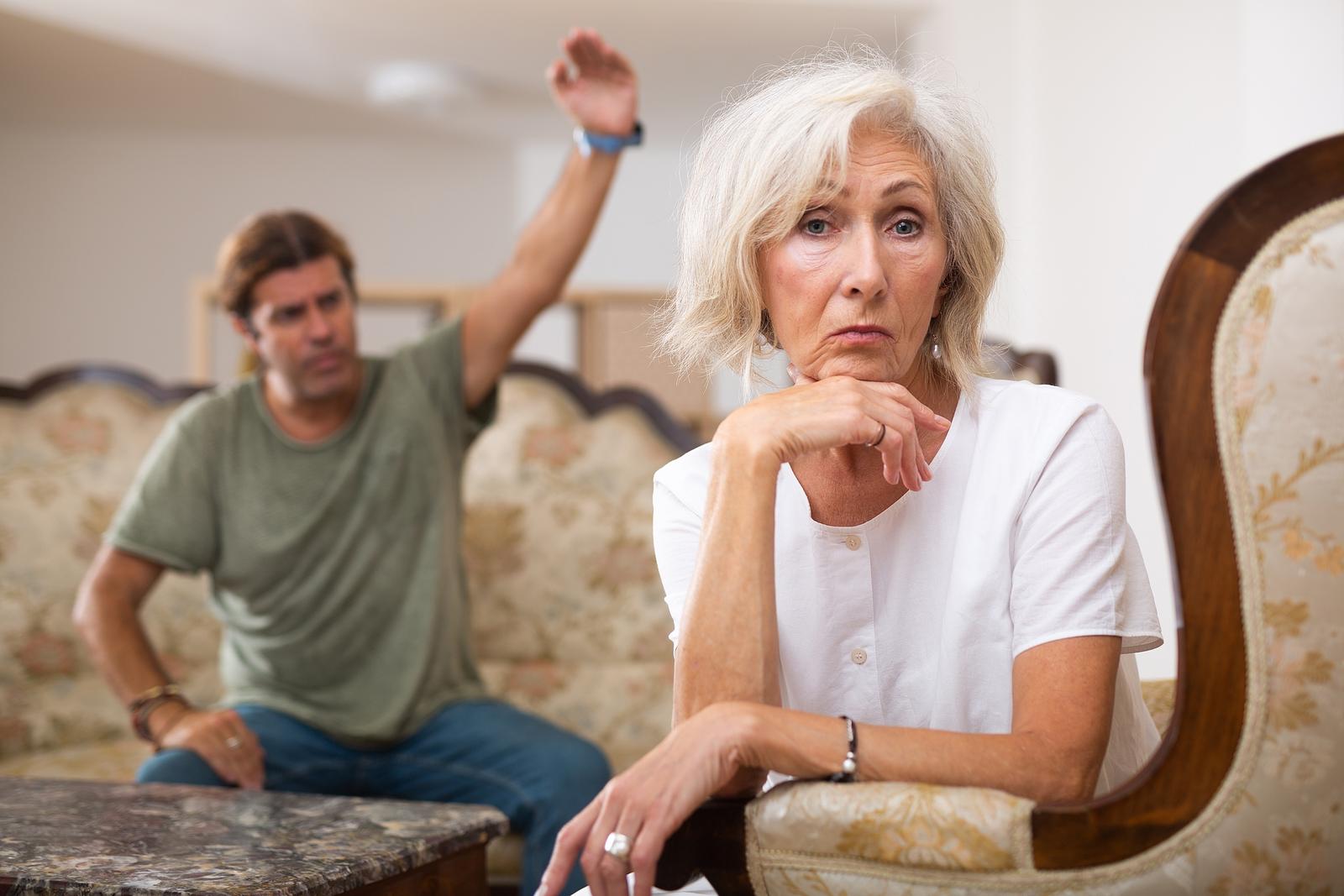
A few specific warning signs can help someone determine if an age gap is contributing to an unhealthy dynamic:
One partner regularly makes decisions for both people without discussion
The older partner dismisses the younger person's opinions or feelings because of their age
One person feels dependent on the other for basic needs or social access
Friends and family are being pushed away, or one partner discourages the other from spending time with people their own age
There is a recurring sense of being talked down to or treated like a child
One person uses their life stage or position to shut down conversations
None of these behaviors are exclusive to age-gap relationships, but the gap itself can make them easier to overlook or harder to push back against.
What Healthy Age-Gap Relationships Look Like
Plenty of couples with large age differences are doing perfectly well together. The gap by itself is not the problem. What matters is how both people treat each other day to day and how they handle the things that come up over time.
Certified Sex Therapist Tracie Zinman-Ibrahim put it simply: "There's not a particular age gap that's right or wrong. It simply comes down to: Is the relationship safe?"
Healthy age-gap couples tend to talk openly about their differences, respect each other's autonomy, and check in regularly about where they are headed together. They recognize that outside opinions will come and go, and they stay grounded in what they actually have rather than what others assume.
Knowing Where You Stand
If you are in a relationship with a noticeable age gap and something feels off, the number of years between you and your partner is probably not the full explanation. Look at the patterns. Pay attention to how decisions are made, how disagreements play out, and how free you feel to be yourself.
An age gap becomes unhealthy when it creates room for one person to hold too much influence over the other, when life stages pull two people in incompatible directions without room for compromise, or when one partner uses the gap as a tool for control. Outside of those situations, the age itself is secondary.
The research supports this idea consistently. Success in these relationships comes down to communication, respect, and shared values. If those things are in place, the years between two people are a detail, not a defining feature.
